The Forever Magic of a Good Mystery
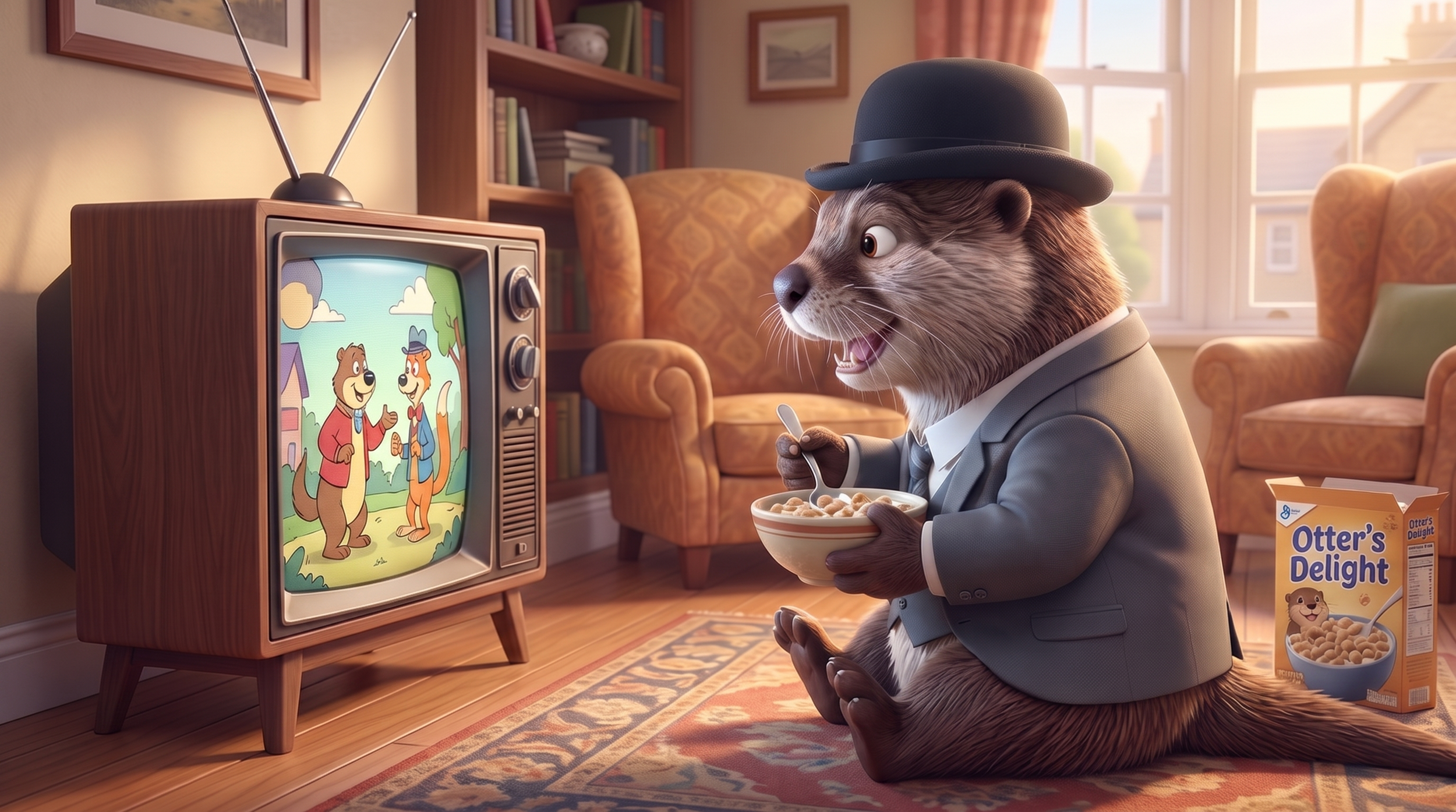
My love for this genre started early. I grew up in the 70s, glued to the living room carpet on Saturday mornings watching cartoon mysteries. There was a unique magic in watching a detective slowly piece together scattered clues, and that feeling of satisfaction when the puzzle finally clicked stayed with me long after the television was turned off.
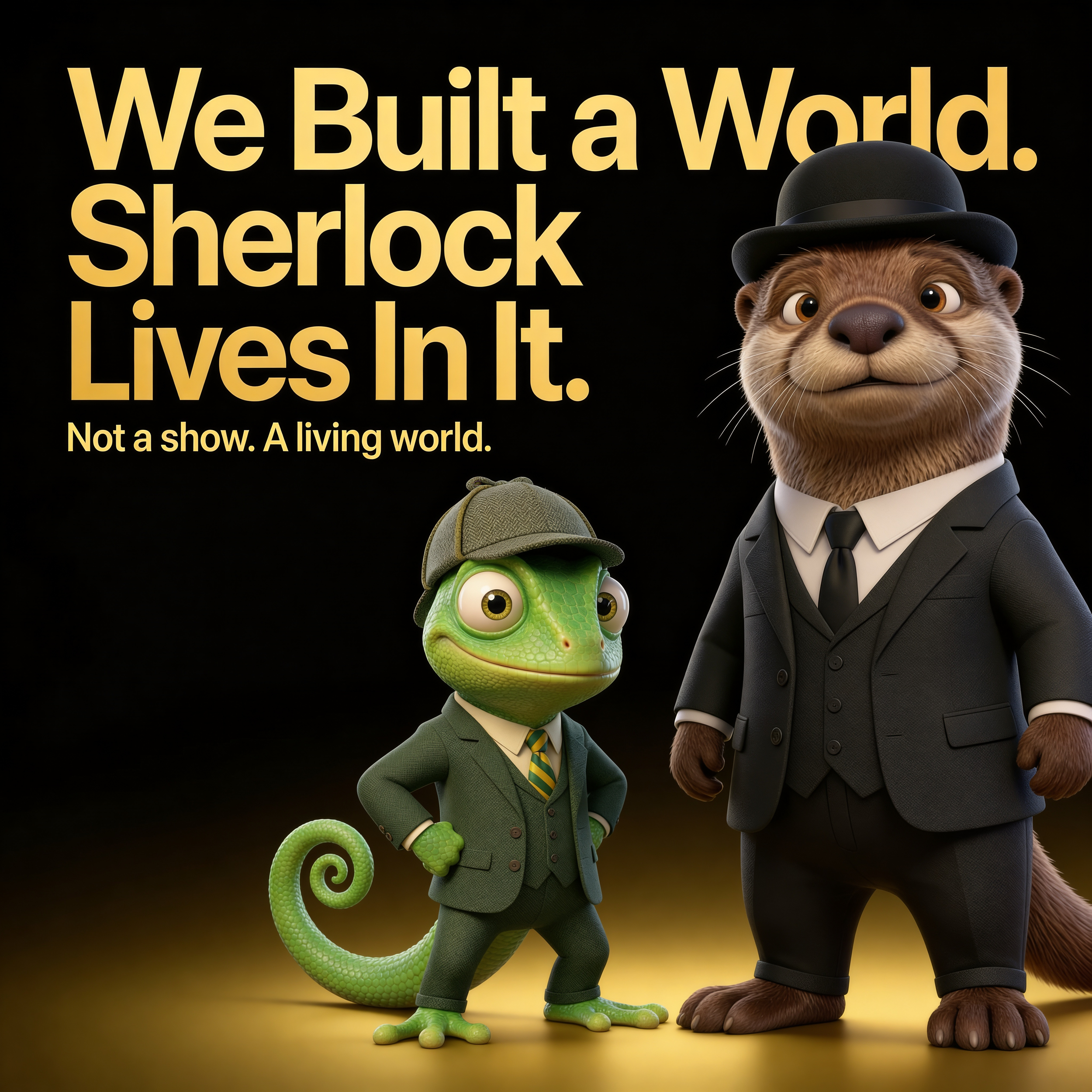
Why the Next Generation of IP Won’t Start with a Pitch Deck. A Smarter Way to Develop and Prove Stories
It’s Time to Modernize "Proof of Concept"
What if we allowed the idea of the animatic to evolve? What if, instead of hidden internal previews, we created external, real-world proof of concept?
I’m not talking about polished films or massive pilots. I’m talking about small, fast, repeatable story units that test clarity, engagement, and character connection in front of a real audience.
The New Model looks like this:
test → refine → validate → scale
The Bridge Between "Watch This" and "What If"
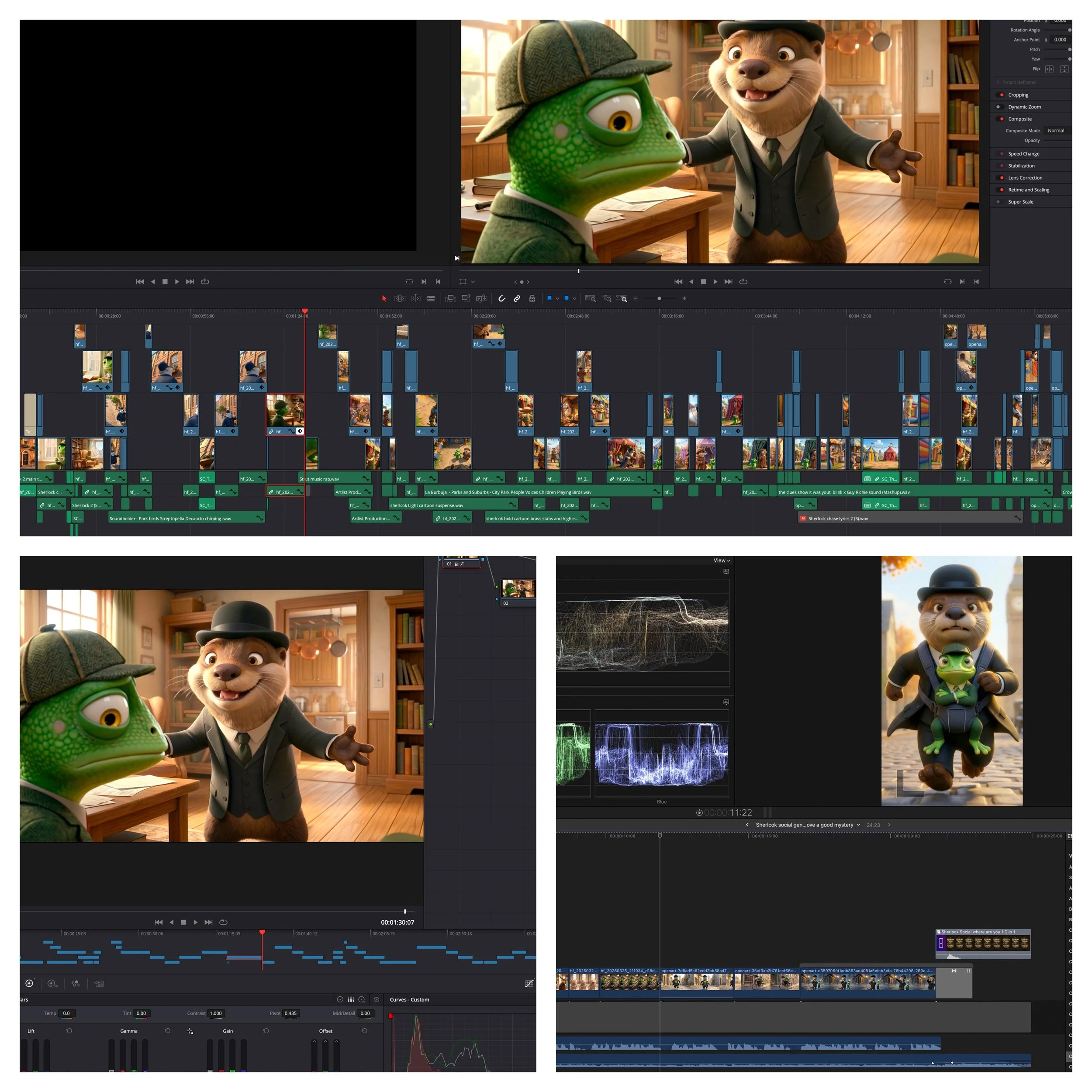
Whether it’s a character that won’t stop talking or a place we can see clearly when we close our eyes, the urge to create is a fundamental part of who we are. But for a long time, those ideas were held captive by the "The Gap." There were barriers of time, high costs, or the simple reality that our hands couldn't always draw what our minds could see.
Today, that gap is smaller than it has ever been.
The tools available to us now are like a set of master keys. Doors that once felt locked are swinging open.
The Soul in the Machine: Can You Really "Own" an AI Character?
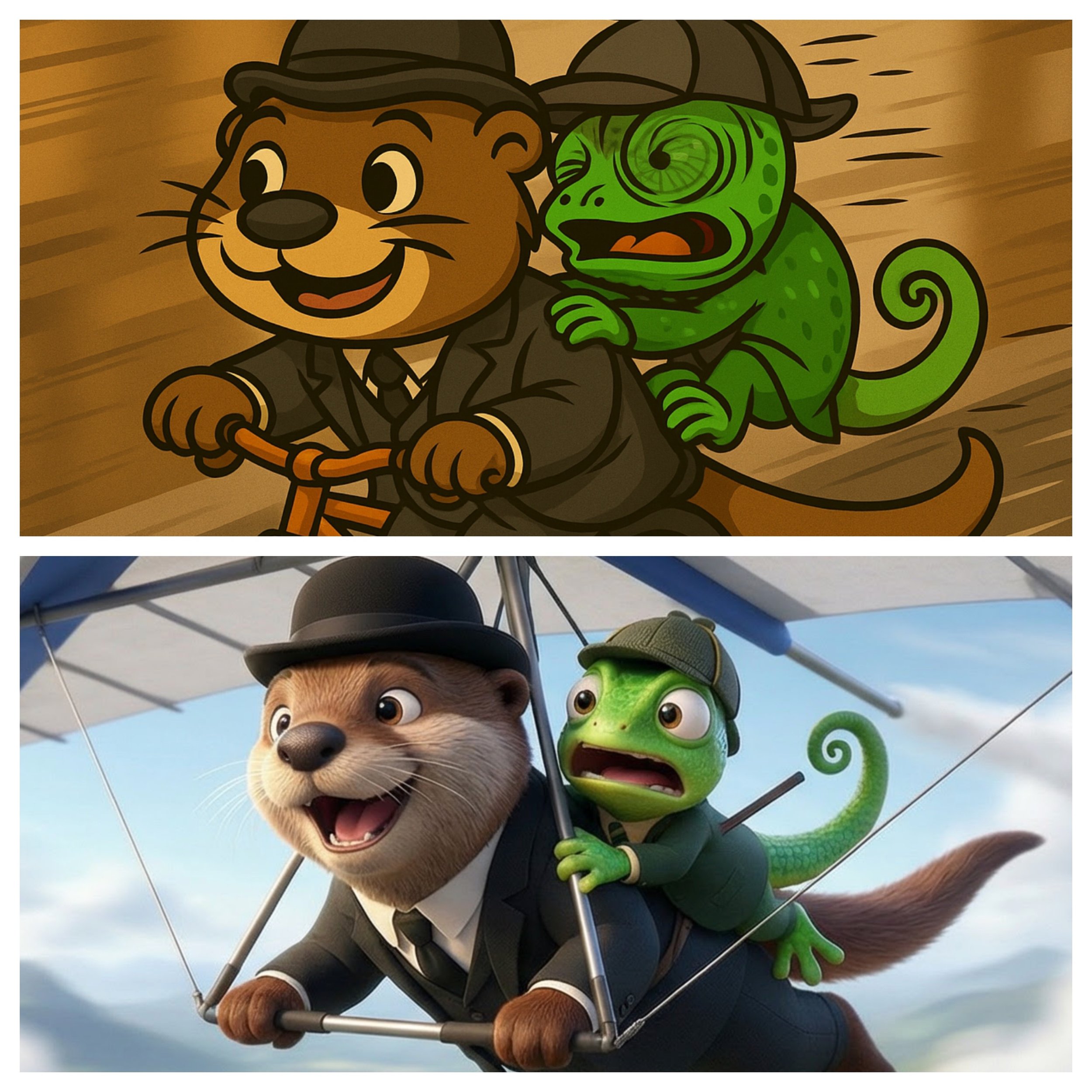
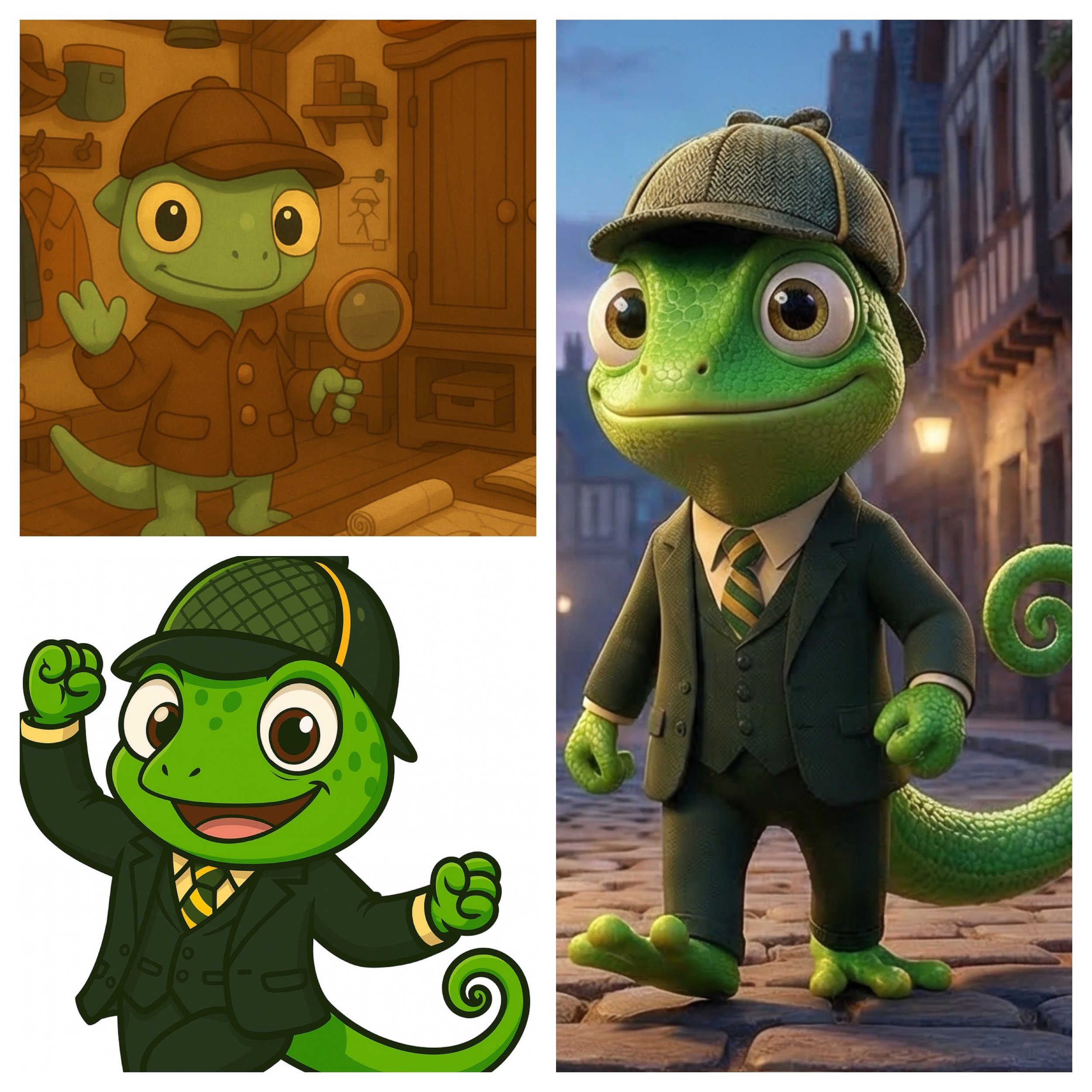
It’s the original spark. The relentless direction. The "No" that you say to a thousand images that aren't quite right until you find the one that is. Sherlock Cromes wasn't "generated" in a single output; he was carved out of a mountain of possibilities through human decision-making.
The Digital Paintbrush: Why the Story Still Matters
When the first glimpses of Sherlock and Waterson appeared, they were experiments—a quiet lizard and a boisterous otter. But characters don’t become "real" just because you have a picture of them. They become real when they start to behave.